
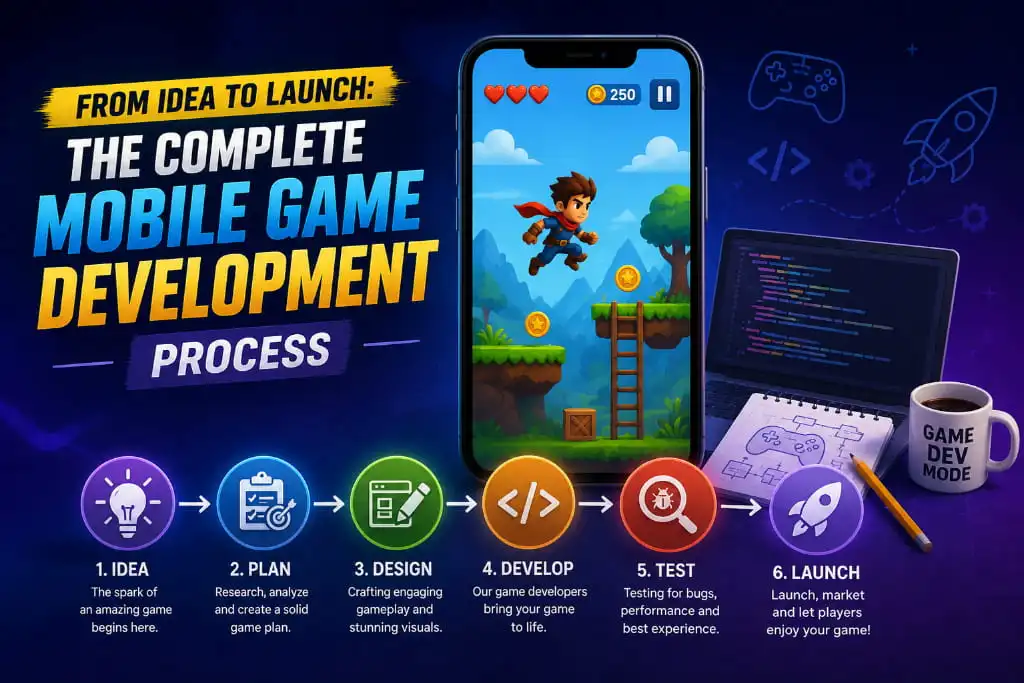
The mobile gaming industry continues to grow rapidly, creating exciting opportunities for businesses, startups, and entrepreneurs. However, developing a successful mobile game involves much more than just having a great idea. It requires careful planning, creative design, technical expertise, testing, and ongoing support. Understanding the complete game development process can help turn your vision into a successful mobile game that players love.
In this blog, we’ll walk you through the complete mobile game development journey—from the initial idea to the final launch.
1. Turning an Idea into a Game Concept
Every successful game starts with an idea. This could be inspired by a popular trend, a unique gameplay mechanic, or a problem you want to solve through gaming.
During this stage, game developers focus on answering important questions:
- Who is the target audience?
- What type of game will it be?
- What makes it unique?
- What platforms will it support?
The goal is to create a clear game concept that serves as the foundation for the entire project. A strong concept helps guide development decisions and ensures everyone involved shares the same vision.
2. Market Research and Planning
Before investing time and resources into development, it is essential to conduct market research. This step helps identify competitors, understand player preferences, and discover market opportunities.
Key activities include:
- Analyzing similar games
- Understanding current gaming trends
- Defining target demographics
- Identifying monetization opportunities
Proper planning reduces risks and helps create a game that appeals to the intended audience.
3. Creating the Game Design Document (GDD)
The Game Design Document, commonly known as a GDD, acts as the blueprint for the entire project.
A typical GDD includes:
- Game mechanics
- Storyline and characters
- Level design
- User interface concepts
- Art style
- Technical requirements
This document ensures that designers, artists, and game developers work together efficiently throughout the project.
4. UI/UX Design and Prototyping
User experience plays a crucial role in the success of any mobile game. Players expect intuitive controls, attractive visuals, and smooth navigation.
During this phase, designers create:
- Wireframes
- User interface layouts
- Character concepts
- Visual assets
- Interactive prototypes
Prototyping allows teams to test gameplay ideas before investing heavily in full-scale game development. Early feedback can help identify issues and improve the overall player experience.
5. Game Development and Coding
This is where the actual development begins. Developers transform concepts and designs into a functional game using modern game engines such as Unity or Unreal Engine.
The development phase typically includes:
Front-End Development
Creating the visible elements that players interact with, including menus, animations, controls, and gameplay mechanics.
Back-End Development
Building server infrastructure, player accounts, leaderboards, multiplayer functionality, and data management systems.
Feature Integration
Adding important features such as:
- In-app purchases
- Achievements
- Social sharing
- Push notifications
- Analytics tools
Professional game developers ensure the game performs smoothly across different devices and operating systems.
6. Artwork, Animation, and Sound Design
A game’s visual and audio elements significantly impact player engagement.
This stage includes:
- Character design
- Environment creation
- 2D or 3D modeling
- Animations
- Sound effects
- Background music
High-quality visuals and immersive audio help create memorable gaming experiences and increase player retention.
7. Testing and Quality Assurance
Even the best-designed games can fail if bugs and performance issues are not addressed.
Quality Assurance (QA) teams thoroughly test the game for:
- Performance issues
- Gameplay bugs
- Device compatibility
- Security vulnerabilities
- User experience problems
Testing is an ongoing process throughout the game development lifecycle. The goal is to deliver a stable and enjoyable experience to players.
8. Launch Preparation
Before launch, developers prepare the game for app store submission.
Important launch activities include:
- App Store Optimization (ASO)
- Creating promotional assets
- Writing app descriptions
- Setting up analytics tracking
- Configuring monetization systems
A successful launch strategy helps improve visibility and attract downloads from day one.
9. Game Launch and Marketing
Once the game is approved by app stores, it is officially launched to players.
Marketing efforts may include:
- Social media campaigns
- Influencer partnerships
- Paid advertising
- Community building
- Content marketing
Launching the game is only the beginning. Continuous promotion helps maintain visibility in a competitive gaming market.
10. Post-Launch Support and Updates
Many successful games continue evolving long after launch. Regular updates keep players engaged and encourage long-term retention.
Post-launch activities include:
- Fixing bugs
- Adding new features
- Introducing events and rewards
- Improving performance
- Responding to player feedback
Ongoing support ensures the game remains relevant and competitive over time.
Why Professional Game Development Matters
Creating a successful mobile game requires expertise across multiple disciplines, including design, programming, testing, marketing, and maintenance. Working with experienced game developers helps streamline the process, reduce development risks, and improve the final product’s quality.
Whether you’re building a casual game, multiplayer experience, educational app, or business-focused gaming solution, a structured game development process is essential for success.
Conclusion
The journey from idea to launch involves much more than coding. Successful game development requires strategic planning, creative design, technical expertise, rigorous testing, and ongoing support. By following a well-defined process, businesses and entrepreneurs can transform innovative ideas into engaging mobile games that attract and retain players.
At Atina Technology, we are experts in game development and have a skilled team of experienced game developers dedicated to turning your ideas into successful mobile games. Whether you have a simple concept or a complex gaming project, we can help you design, develop, launch, and scale your game.
Contact Atina Technology today and let’s create an amazing game together. Your idea could be the next big success in the gaming industry!