
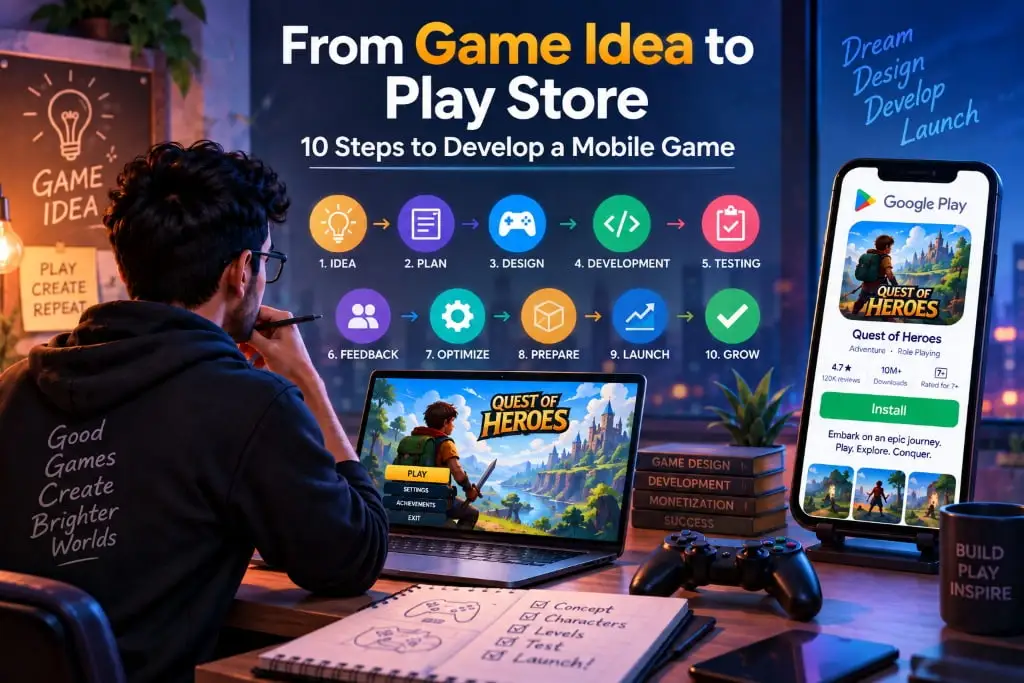
Have you ever had a great mobile game idea but wondered how it could become a real game on the Google Play Store or Apple App Store? Turning a simple concept into a successful mobile game requires much more than writing code. It involves game design, planning, development, testing, optimization, marketing, and continuous improvements.
With the mobile gaming industry continuing to grow, businesses, startups, and entrepreneurs are investing in custom mobile games to engage users and create new revenue opportunities. But before players can download your game, your idea needs to go through several important stages.
Here are 10 essential steps to develop a mobile game, from the initial idea to publishing it on the Play Store.
1. Start With a Clear Game Idea
Every successful game begins with an interesting idea. Start by defining what your game is about and what makes it different from thousands of other games available today.
Think about:
- What type of game are you creating?
- Who is your target audience?
- What platform will you target?
- What makes your game unique?
- How will players interact with it?
Your idea could be a puzzle game, action game, racing game, multiplayer game, educational game, simulation game, or casual mobile game. The important thing is to create a clear concept before development begins.
2. Research the Market and Competitors
A great idea still needs a market. Before investing in development, research similar games and understand what players already enjoy.
Check popular games in your selected category and analyze their gameplay, graphics, monetization model, reviews, and user ratings. Pay special attention to negative reviews because they can reveal problems that your game could solve.
Market research can help you identify opportunities and avoid creating a game that feels like a simple copy of an existing title.
3. Create the Game Design Document
Once the idea is clear, document how the game will work. A Game Design Document (GDD) acts as a roadmap for the development team.
It can include:
- Game concept and objectives
- Characters and story
- Game mechanics
- Levels and challenges
- Controls
- Art style
- Sound and music
- Monetization strategy
- Target devices and platforms
A detailed plan helps designers, developers, artists, and testers work toward the same goal.
4. Choose the Right Game Engine and Technology
Choosing the right technology can significantly affect development time, performance, graphics, and scalability.
Popular game engines such as Unity and Unreal Engine offer powerful tools for creating modern games. The right choice depends on your game’s requirements, graphics quality, target platform, multiplayer needs, and development budget.
For example, a lightweight 2D mobile game may require a different technology approach than a high-quality 3D multiplayer game.
5. Design Characters, Environments, and User Interface
Visual design plays a major role in attracting and retaining mobile gamers. Your game’s characters, environments, animations, icons, menus, and user interface should create a consistent visual experience.
The design should also be optimized for mobile screens. Buttons need to be easy to tap, menus should be simple to understand, and important information should be visible without making the screen feel crowded.
A strong combination of game design and user experience can make your game more enjoyable from the first interaction.
6. Begin Game Development
Now the concept starts becoming an actual playable product. Developers build the gameplay mechanics, controls, levels, character interactions, animations, audio integration, scoring systems, and other features.
This is where the Mobile Game Development Process moves from planning and design into implementation.
Development is usually completed in stages rather than building the entire game at once. Teams can first create a basic playable version, often called a prototype or Minimum Viable Product (MVP), and then gradually add features.
7. Add Monetization Features
If your goal is to generate revenue, decide how your game will make money before launch.
Common mobile game monetization models include:
- In-app purchases
- Rewarded advertisements
- Subscription plans
- Premium downloads
- Cosmetic items
- Battle passes
The monetization strategy should not negatively affect gameplay. Players are more likely to stay engaged when advertisements and purchases are implemented naturally without making the game feel overly restrictive.
8. Test the Game on Multiple Devices
Testing is one of the most important stages of game development. A game that works perfectly on one smartphone may experience crashes, lag, control issues, or graphical problems on another device.
Testing should cover:
- Different screen sizes
- Android and iOS devices
- Performance and loading speed
- Gameplay mechanics
- Touch controls
- Audio and graphics
- In-app purchases
- Network connectivity
- Crashes and bugs
Real-device testing is particularly important because mobile users have different hardware configurations and internet conditions.
9. Optimize and Prepare for Launch
Before publishing your game, optimize its performance and prepare all required store assets. Large game files, slow loading times, excessive battery usage, and poor performance can result in negative reviews.
Your launch checklist should include:
- Game icon
- Screenshots
- Promotional graphics
- Game description
- Privacy policy
- Age rating
- App permissions
- Keywords and store listing optimization
- Final performance testing
A well-optimized store listing can also help improve visibility and encourage more users to download your game.
10. Publish the Game on the Play Store and Keep Improving
After completing development and testing, it is time to submit your game to the Google Play Store. Developers need to follow Google’s publishing requirements and provide the necessary app information before submitting the final build.
But launching your game is not the end.
After release, monitor player feedback, downloads, retention, crashes, ratings, and in-game behavior. Use this information to release updates, fix bugs, introduce new content, and improve the overall player experience.
Successful mobile games are often improved continuously based on what players want.
Final Thoughts
Turning a game idea into a downloadable mobile game requires creativity, technical expertise, strategic planning, and continuous testing. From researching your audience and designing gameplay to development, optimization, publishing, and post-launch updates, every stage plays an important role in creating a successful gaming product.
If you have a unique game idea and want to turn it into a professionally developed mobile game, Atina Technology is expert in Game Development, helping businesses and entrepreneurs transform concepts into engaging and scalable gaming experiences.