
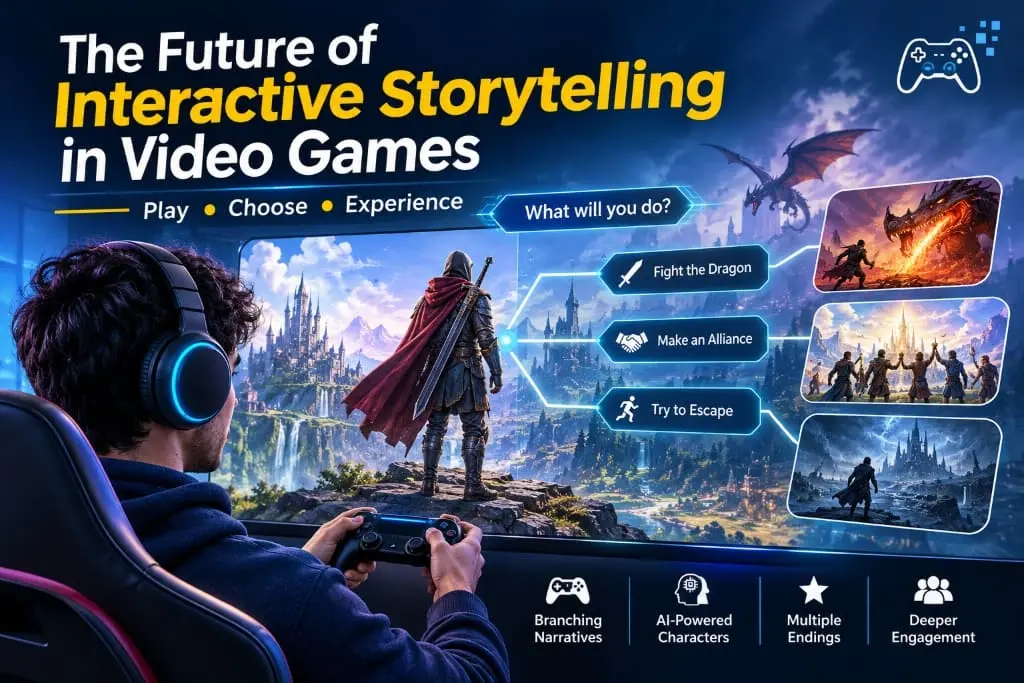
The gaming industry is evolving beyond traditional gameplay, and game development is becoming more focused on creating immersive experiences where players influence the story through their decisions. Whether it is an action adventure or a story-driven mobile game, modern players want more than completing missions. They want to explore different possibilities, interact with realistic characters, and experience stories that respond to their choices.
This evolution has made interactive storytelling an important part of modern gaming. With technologies like artificial intelligence (AI), branching narratives, and dynamic character interactions, developers are creating experiences that make every player’s journey feel unique.
What Is Interactive Storytelling in Video Games?
Interactive storytelling is a game design approach that allows players to influence the direction of a story through their actions and decisions. Unlike traditional storytelling, where the narrative follows a fixed sequence, interactive games give players greater control over what happens next.
For example, a player might choose to save a character, complete a difficult mission, or make a decision that changes the game’s ending. These choices make players feel connected to the story and its characters.
Games such as Detroit: Become Human and Until Dawn demonstrate how player decisions can influence story progression and create different outcomes.
How Does Interactive Storytelling Work?
Interactive storytelling combines narrative design, gameplay mechanics, and player decisions to create engaging experiences.
Some important elements include:
- Player Choices: Decisions influence events, characters, and story outcomes.
- Branching Narratives: Different decisions lead to alternative story paths.
- Character Interactions: Players communicate with characters through dialogue and actions.
- Multiple Endings: Different choices can unlock different conclusions.
- Dynamic Events: Certain game events change according to player behavior.
These elements help transform a regular gaming experience into a personalized adventure.
How Player Choices Make Video Games More Engaging
Player choices are one of the most important elements of interactive storytelling. When players have control over important decisions, they become emotionally invested in the game’s journey.
For example, choosing between helping an ally or completing a mission can create different consequences. These decisions may influence character relationships, unlock new missions, or change the final outcome.
Meaningful choices also encourage players to replay games to discover alternative storylines. This improves replayability and gives players more reasons to return.
How AI Is Transforming Interactive Storytelling
Artificial intelligence is opening new possibilities for interactive storytelling in video games. Developers can use AI technologies to create more responsive characters, dynamic conversations, and personalized gameplay experiences.
Some emerging applications include:
- AI-Powered NPCs: Non-player characters can respond more naturally to player interactions.
- Dynamic Dialogues: Conversations can adapt according to previous decisions.
- Personalized Storylines: Game events and quests can respond to player behavior.
- Adaptive Gameplay: Challenges can adjust based on player performance.
- Intelligent Characters: NPCs can use contextual information to make interactions feel more realistic.
However, AI-generated content still requires developer supervision to maintain story quality, consistency, and meaningful gameplay.
The Role of Branching Narratives and Multiple Endings
Branching narratives allow developers to create multiple story paths within one game. Instead of following a single storyline, players experience different events depending on their decisions.
For example, one decision might help a character survive, while another could change the entire direction of the mission. These possibilities make the story less predictable and encourage exploration.
Creating branching narratives requires careful planning, writing, programming, and testing. Developers must ensure that every story path feels connected and delivers a satisfying experience.
How Interactive Storytelling Improves Player Engagement
Interactive storytelling can improve player engagement by making gameplay more personal and meaningful.
Its major benefits include:
- Better Immersion: Players feel involved in the game’s world.
- Emotional Connection: Strong characters and meaningful decisions create memorable experiences.
- Higher Replayability: Alternative storylines encourage players to play again.
- Personalized Gameplay: Different decisions create unique experiences.
- Stronger Player Retention: Engaging narratives give players reasons to continue playing.
For successful game development, combining engaging storytelling with smooth gameplay, attractive visuals, and intuitive controls is essential.
What Is the Future of Interactive Storytelling in Video Games?
The future of interactive storytelling will likely involve more intelligent characters, adaptive narratives, and immersive gaming environments. AI-powered dialogues may allow players to communicate with characters in more natural ways, while advanced game engines can help developers build detailed and responsive worlds.
Other emerging possibilities include interactive multiplayer narratives, personalized quests, emotion-responsive gameplay, and procedurally generated story events.
Although these technologies offer exciting opportunities, strong storytelling, creative direction, and thoughtful game design will remain essential.
Conclusion
Interactive storytelling is changing how players experience video games by giving them greater control over decisions, characters, and story outcomes. From branching narratives and multiple endings to AI-powered NPCs, these innovations are creating more immersive and engaging gaming experiences.
As the gaming industry continues to evolve, developers who combine creative storytelling with modern technology will have more opportunities to build memorable games.
Atina Technology focuses on creating engaging digital experiences through innovative game development solutions.
We are Atina Technology, among India’s top experts in game development, helping businesses transform creative ideas into interactive and engaging games. Let’s bring your gaming vision to life with the right technology and creativity.