
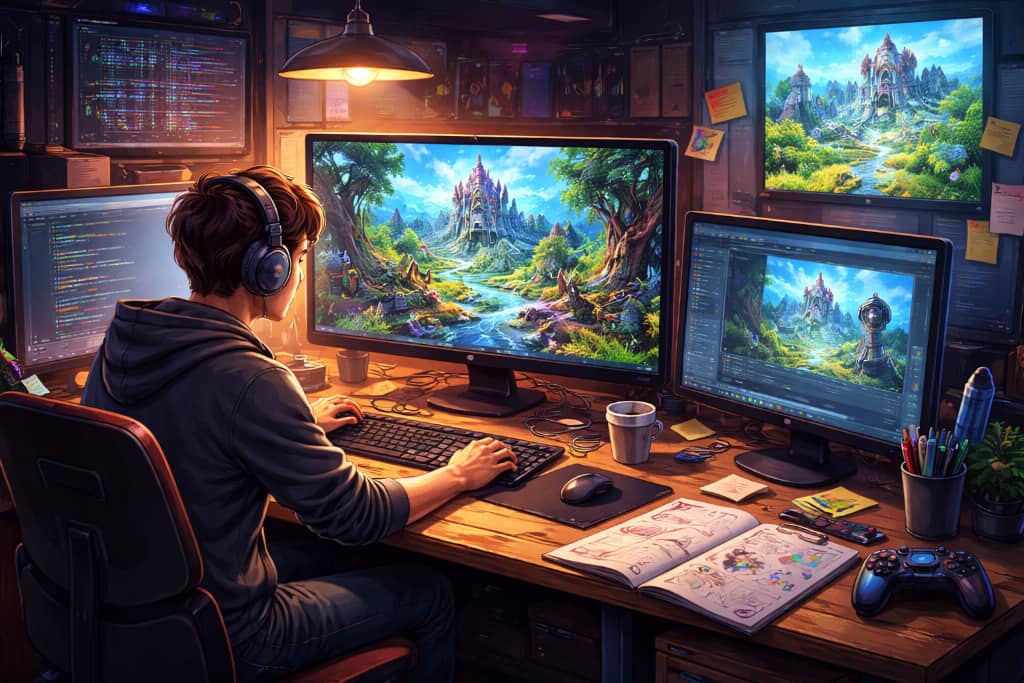
Game development is no longer just about writing code or designing characters. It’s a powerful blend of creativity, logic, technology, and storytelling. Whether you dream of building the next viral mobile game or a high-end PC or console experience, success in game development depends on mastering a unique set of skills.
If you are a beginner or someone planning to enter this exciting industry, this guide will walk you through the essential skills you need to succeed in game development—in a simple, engaging, and easy-to-understand way.
1. Strong Programming Skills – The Backbone of Every Game
At the heart of every game lies code. Programming turns ideas into playable reality. You don’t need to master every language, but learning the right ones is crucial.
Popular programming languages in game development include:
- C# – Widely used with Unity
- C++ – Common in Unreal Engine
- JavaScript – Useful for browser-based games
- Python – Great for learning logic and prototyping
Programming helps you control gameplay mechanics, player movement, AI behavior, scoring systems, and more. The stronger your coding foundation, the more freedom and power you’ll have while building games.
2. Game Design Thinking – Creating Fun That Lasts
A game is successful only when players enjoy playing it. This is where game design skills matter. Game design is about understanding how players think and feel.
Key elements of game design include:
- Game mechanics (rules and interactions)
- Level design and difficulty balance
- Player engagement and rewards
- User experience (UX)
Great game developers don’t just build games—they craft experiences that keep players coming back again and again.
3. Creativity & Storytelling – The Soul of a Game
Creativity is what separates a forgettable game from a memorable one. From unique characters to immersive worlds, creativity plays a major role in game development.
Storytelling helps:
- Build emotional connections with players
- Create engaging missions and narratives
- Make characters feel alive and relatable
Even simple games become powerful when they tell a story that players care about. A strong imagination can turn a basic concept into a viral hit.
4. Understanding Game Engines – Your Development Playground
Game engines are tools that make game development faster and smarter. Learning at least one popular engine is a must-have skill.
Top game engines include:
- Unity – Beginner-friendly and versatile
- Unreal Engine – Known for high-quality graphics
- Godot – Open-source and lightweight
Game engines help you handle graphics, physics, animations, sound, and scripting—all in one place. Mastering an engine gives you the confidence to build, test, and launch games efficiently.
5. Basic Art & Animation Knowledge – Visual Appeal Matters
You don’t need to be a professional artist, but understanding basic art and animation principles is a big advantage.
Important areas include:
- Character and environment design
- Color theory and visual balance
- 2D and 3D animations
- UI (User Interface) design
Good visuals instantly grab attention and make your game look polished and professional, even with simple graphics.
6. Problem-Solving Skills – Every Developer’s Superpower
Game development is full of challenges. Bugs, crashes, performance issues—these are part of the journey. That’s why problem-solving is a core skill.
A successful game developer knows how to:
- Debug errors efficiently
- Optimize performance
- Find creative solutions to technical problems
- Learn from failures and improve
Every problem you solve makes you a stronger and smarter developer.
7. Teamwork & Communication – Games Are Built Together
Most games are created by teams, not individuals. Being able to communicate clearly and work collaboratively is essential.
You may need to work with:
- Designers
- Artists
- Sound engineers
- Testers and marketers
Good communication ensures everyone stays aligned, saving time and reducing mistakes. Strong teamwork skills can take your career to the next level.
8. Continuous Learning – Stay Ahead in a Fast-Changing Industry
The game industry evolves rapidly. New tools, engines, trends, and technologies appear every year. Successful developers never stop learning.
Stay updated by:
- Following game development blogs and communities
- Experimenting with new tools and features
- Playing and analyzing popular games
- Learning about AI, AR, VR, and multiplayer systems
The more you learn, the more future-ready you become.
Final Thoughts
Game development is an exciting, challenging, and highly rewarding career path. By mastering programming, game design, creativity, problem-solving, and teamwork, you build a solid foundation for long-term success in this fast-growing industry. Remember, every legendary game developer once started with curiosity and a single idea.
Consistency, learning, and passion are the real game-changers. The more you experiment, build, and improve, the closer you move toward creating games that players truly love. Don’t wait for perfection—start creating and evolve with every project.
Ready to Build Your Own Game? Let the Experts Help
At Atina Technology, we specialize in professional game development solutions—from concept design and game mechanics to high-performance development and deployment. Whether you’re planning a mobile game, PC game, or interactive gaming experience, our expert team turns your vision into a powerful, engaging reality.
Partner with Atina Technology and level up your game idea into a market-ready product.
Contact us today and start your game development journey with confidence.