
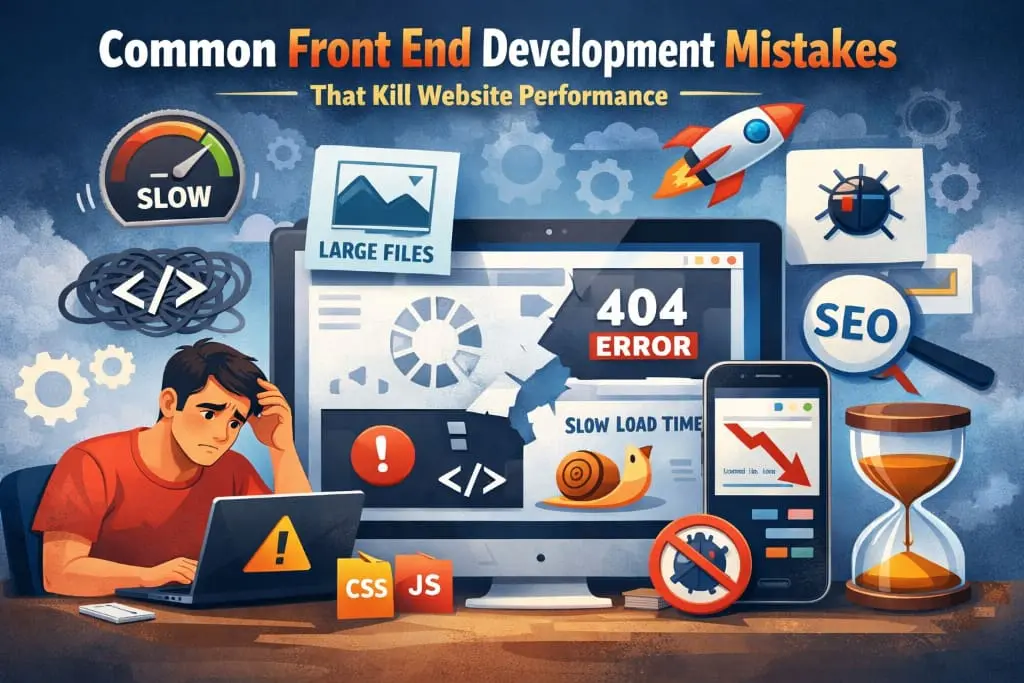
A website may look visually stunning, but if it loads slowly or feels clunky, users won’t stick around. In fact, most visitors decide whether to stay on a website within the first few seconds. That’s why front end development plays a critical role in website success. Unfortunately, many websites fail not because of poor ideas, but because of avoidable front end development mistakes that silently damage performance.
Let’s explore these mistakes in a practical way—so you can avoid them and build faster, SEO-optimized, user-friendly websites.
When Design Takes Priority Over Performance
One of the most common front end development mistakes is prioritizing design over performance. Heavy animations, excessive effects, and complex layouts may look impressive, but they often slow down the website.
Search engines like Google care deeply about website speed optimization. If your pages take too long to load, rankings drop, bounce rates rise, and conversions suffer.
Smart front end development balances beauty with performance. Clean code, optimized assets, and fast rendering are just as important as visual appeal.
The Hidden Danger of Heavy Images
Images are essential for storytelling, branding, and user engagement—but they are also one of the biggest reasons websites become slow. Uploading large, uncompressed images directly from cameras or design tools can drastically reduce page speed.
This mistake affects both desktop and mobile users, especially those on slower networks. Since Google uses mobile-first indexing, poor image optimization can hurt SEO badly.
Modern front end development focuses on using compressed images, next-gen formats, and proper sizing to ensure fast loading without sacrificing quality.
Too Much JavaScript, Too Little Speed
JavaScript is powerful, but overusing it is a performance killer. Many websites rely on multiple libraries, plugins, and frameworks even when they are not truly needed.
Excessive JavaScript increases load time, delays interactivity, and causes performance issues on low-end devices. This directly impacts front end development performance and user experience.
A performance-focused approach involves using only essential scripts, removing unused code, and loading JavaScript efficiently so the site feels smooth and responsive.
Mobile Users Are Not an Afterthought
A major front end development mistake is designing for desktop first and “adjusting” later for mobile. In today’s world, most users access websites through smartphones.
If your website isn’t responsive, users will struggle with broken layouts, unreadable text, and difficult navigation. Search engines see this as a poor user experience and rank such websites lower.
Strong responsive web design ensures that layouts adapt naturally to all screen sizes, creating a consistent and mobile-friendly website that performs well everywhere.
Messy CSS That Slows Everything Down
CSS might seem harmless, but poorly structured stylesheets can negatively impact website performance. Repeated rules, unused styles, and overly complex selectors make browsers work harder than necessary.
Over time, messy CSS also becomes difficult to maintain, leading to bugs and slower updates.
Efficient front end development uses clean CSS practices, reusable components, and optimized styles that load quickly and render smoothly.
Forgetting About Browser Compatibility
Not all users browse the web the same way. A website that works perfectly in one browser but breaks in another creates frustration and damages credibility.
Ignoring browser compatibility is a subtle but serious front end development mistake. Users don’t care why a site is broken—they simply leave.
Testing across major browsers ensures consistent performance and reinforces trust in your brand.
Accessibility Is Performance Too
Accessibility is often overlooked, yet it directly impacts engagement, reach, and SEO. Websites that are difficult to navigate for users with disabilities lose potential visitors and signal poor usability to search engines.
Front end development best practices include semantic HTML, readable text, proper contrast, and keyboard navigation. These improvements make websites more inclusive—and more search-engine-friendly.
Launching Without Proper Testing
Many websites go live without enough testing, assuming everything will work fine. This leads to slow interactions, layout issues, and performance bugs that could have been avoided.
Testing is not optional. Performance testing, responsiveness checks, and speed audits are essential steps in professional front end development.
Why Professional Front End Development Makes the Difference
Front end development is not just about writing code—it’s about building experiences that are fast, functional, and future-ready. Avoiding these mistakes requires expertise, strategy, and continuous optimization.
Atina Technology welcomes you — we are expert in Front End Development.
We create performance-driven, SEO-friendly websites designed to rank higher, load faster, and convert better.
Final Takeaway
Small front end development mistakes can create big problems for website performance and SEO. By focusing on speed, responsiveness, accessibility, and clean code, you can build websites that users love and search engines reward.
In a competitive digital space, strong front end development isn’t a luxury—it’s the foundation of online success.